
Artificial Intelligence (AI) has become one of the fastest-growing technologies in the modern digital era. With every passing day, AI tools are becoming deeply integrated into almost every field of life, including content writing, image generation, video editing, coding, marketing, and research. Businesses, freelancers, and creators are all using AI tools to improve productivity and enhance creativity.
However, traditional AI platforms such as ChatGPT, Google Gemini, and other popular tools often come with strict rules and heavy content filters. These filters are implemented for safety and ethical reasons, but in many cases, they can limit user creativity and freedom. Because of this limitation, the demand for uncensored AI tools has increased significantly in recent years.
Uncensored AI tools are advanced systems that provide users with more freedom, allowing them to explore ideas without unnecessary restrictions. The main purpose of these tools is to offer open-ended creativity, flexible responses, and greater control. As a result, they have become extremely useful for writers, developers, researchers, and digital artists.
In 2025, the AI industry has entered a new phase where open-source and uncensored models are rapidly growing. Users are shifting from only “safe AI” systems toward more powerful and flexible AI solutions. This transformation has created new opportunities in the digital world, but it has also increased the importance of ethical use and responsible AI behavior.
In this detailed guide, we will explore the best uncensored AI tools in 2025, their features, advantages, risks, and future trends to help you understand which tool is best for your needs and how to use them effectively.

What Are Uncensored AI Tools?
Uncensored AI tools are advanced artificial intelligence systems that allow users to generate responses with greater freedom and flexibility. In simple terms, these are AI tools that either have minimal content filters or significantly reduced restrictions compared to traditional AI platforms.
Standard AI tools like ChatGPT, Google Gemini, and other mainstream platforms provide a safe and controlled environment. This means that if a query is sensitive, controversial, or against policy guidelines, the AI may refuse to respond or heavily filter the output. While this approach is important for safety and ethical use, it can sometimes limit creativity and open exploration.
In contrast, uncensored AI tools focus more on open-ended interaction. They allow users to freely explore ideas, prompts, and creative concepts without unnecessary restrictions. This makes them highly popular among writers, developers, researchers, designers, and digital creators.
Uncensored AI systems are often based on open-source models or specially fine-tuned frameworks where developers can customize rules, filters, and output behavior. This flexibility makes them useful for complex storytelling, experimental content creation, and advanced AI testing.
However, it is important to understand that “uncensored” does not mean illegal or harmful content is encouraged. Responsible platforms still follow basic legal and ethical boundaries while reducing unnecessary limitations.
In today’s rapidly evolving digital world, uncensored AI tools have become an important alternative for users who want more control, personalization, and creative freedom.
Why People Use Uncensored AI Tools
The demand for uncensored AI tools is increasing rapidly in 2025 as more users look for greater flexibility, creativity, and control in artificial intelligence systems. While traditional AI platforms like ChatGPT, Google Gemini, and others provide safe and highly moderated environments, they also come with strict content policies and limitations. These restrictions often lead users to explore uncensored AI alternatives.
One of the main reasons people use uncensored AI tools is creative freedom. Writers, bloggers, marketers, and digital artists often need unrestricted AI assistance to generate unique ideas, stories, scripts, and creative content. However, mainstream AI tools sometimes block or refuse certain prompts, which can interrupt the creative process. Uncensored AI systems reduce these limitations, allowing users to explore ideas more openly and naturally.
Another important reason is research and experimentation. Developers, students, and AI enthusiasts use uncensored AI tools to study how language models respond to different types of inputs. These tools provide a more open environment for testing, fine-tuning, and understanding AI behavior without heavy restrictions. This makes them valuable for learning and innovation purposes.
Content creation is also a major driving factor. In today’s digital world, content creators need fast, diverse, and engaging outputs for blogs, social media, videos, and marketing campaigns. Uncensored AI tools help generate more varied and sometimes more natural-sounding content, which can improve creativity and productivity.
Another reason is customization and control. Many uncensored AI platforms, especially open-source models, allow users to modify settings, train custom datasets, and adjust outputs according to their needs. This level of control is not always available in traditional AI systems.
Finally, some users prefer uncensored AI tools for privacy and independence. They may want offline or self-hosted AI systems where their data is not heavily monitored or stored on external servers. This gives them more confidence and control over their information.
In conclusion, people use uncensored AI tools mainly because they offer more freedom, better customization, and fewer restrictions compared to traditional AI platforms.
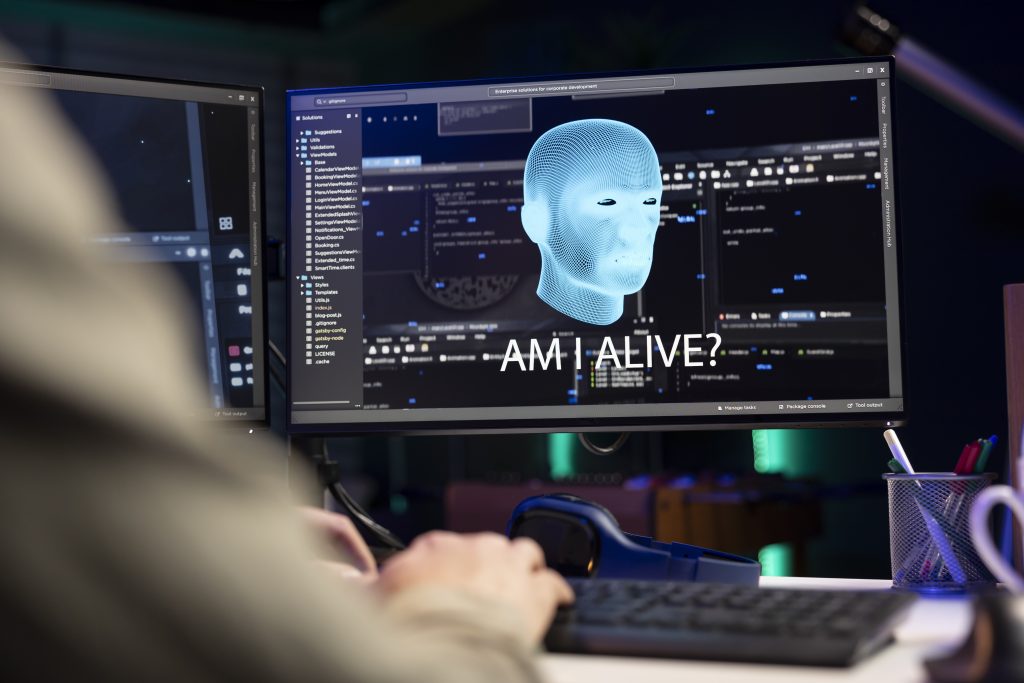
Key Reasons (Summary)
- Creative Freedom
- Research Purposes
- Roleplay & Fiction Writing
- AI Development
- Privacy & Control
Best Uncensored AI Tools in 2025
Below are the most popular and powerful uncensored AI tools available in 2025.
1. GPT Uncensored (Best Overall Uncensored AI)
Key Features:
- No strict content filters
- AI chat + image generation
- Private conversations
- Custom character creation
- Fast response system
- Free credits available
Why It Stands Out:
It combines multiple AI functions in a single platform, making it suitable for both beginners and professionals.
Pros:
- Very flexible responses
- Easy to use
- Multi-purpose AI system
Cons:
- Premium required for heavy usage
- Limited enterprise features
AI Terms Glossary (AI Technology & Systems)
Speech recognition meaning:
Understanding spoken words and converting speech into text or commands.
Facial recognition meaning:
Identifying or verifying faces using AI image analysis technology.
Object detection meaning:
Finding and recognizing objects inside images or videos.
Computer vision meaning:
AI technology that allows systems to see and understand images or visual data.
Natural language processing meaning:
AI understanding and processing of human language in text or speech form.
Sentiment analysis meaning:
Detecting emotions, opinions, or attitudes in written text.
Chatbot framework meaning:
A system or platform used to build and manage chatbots.
API meaning:
A tool that allows different software systems to connect and share information.
Interface meaning:
An interaction point between the user and the system.
Database meaning:
Structured data storage is used to organize and manage information.
Server meaning:
A system that provides data, services, or resources to other computers or devices.
2. Stable Diffusion (Best for AI Image Generation)
Key Features:
- Fully customizable models
- Local or cloud usage
- High-quality image generation
- Strong community support
Pros:
- Full control over output
- Open-source flexibility
- Large developer community
Cons:
- Requires technical setup
- Needs strong hardware
3. Reelmind AI (Best for Video + Image Creation)
Key Features:
- AI video generation
- Multi-image fusion
- Custom AI training
- Character consistency tools
Pros:
- Excellent for video creators
- Strong customization
- Monetization options
Cons:
- Learning curve
- Paid features required
4. LLaMA 3 Uncensored Models
Key Features:
- Open-weight architecture
- Fine-tuning support
- Flexible deployment
Pros:
- Ideal for developers
- Can be self-hosted
- Highly customizable
Cons:
- Requires technical knowledge
- No built-in interface
5. Local AI Models (Offline Systems)
Key Features:
- No internet required
- Full privacy control
- No external restrictions
Pros:
- Maximum privacy
- No censorship
- Fully customizable
Cons:
- High system requirements
- Complex setup
Comparison of Top Uncensored AI Tools
| Tool | Type | Strength | Difficulty | Best For |
| GPT Uncensored | Chat + Image | All-in-one | Easy | General users |
| Stable Diffusion | Image AI | Customization | Medium | Designers |
| Reelmind AI | Video + Image | Creative media | Medium | Creators |
| LLaMA Models | Text AI | Flexibility | Hard | Developers |
| Local AI Tools | Offline AI | Privacy | Hard | Advanced users |
Advantages of Uncensored AI Tools
- More Creative Output
- Better Customization
- Privacy Control
- No API Restrictions
Risks & Challenges
- Ethical Concerns
- Legal Limitations
- Quality Variation
- Security Risks
Ethical Use of Uncensored AI
Users should always:
- Avoid harmful or illegal content
- Respect privacy laws
- Use AI for education and creativity
- Prevent misuse of generated content
Responsible usage ensures a safe and productive AI ecosystem.
Future of Uncensored AI (2025 & Beyond)
- Hybrid AI Systems
- Personal AI Models
- More Offline AI Development
- Balanced AI Regulations
- Growth in Creative Industries

Conclusion
Artificial Intelligence has become one of the most powerful and transformative technologies of the modern era, and its impact is only expected to grow further in the coming years. Uncensored AI tools represent a new direction in this evolution, offering users more freedom, flexibility, and creative control compared to traditional AI systems.
These tools have opened new possibilities for writers, developers, designers, researchers, and digital creators by allowing them to explore ideas without excessive restrictions. Whether it is content creation, storytelling, image generation, or technical experimentation, uncensored AI tools provide a more open and dynamic environment for innovation.
However, with greater freedom also comes greater responsibility. It is important to understand that while these tools reduce limitations, they should always be used ethically and within legal boundaries. Responsible usage ensures that AI technology remains a positive force that supports creativity, learning, and productivity rather than causing harm or misuse.
Looking ahead, the future of uncensored AI is highly promising. We are moving toward more advanced, personalized, and hybrid AI systems that will balance freedom with safety. As technology continues to evolve, these tools will likely become more powerful, more accessible, and more widely used across different industries.
In conclusion, uncensored AI tools are not just a trend—they are part of a larger shift in how humans interact with artificial intelligence. When used wisely, they can become powerful assistants that enhance creativity, improve efficiency, and unlock new opportunities in the digital world.
FAQs
Q1: What is an uncensored AI tool?
An uncensored AI tool is an advanced artificial intelligence system that provides users with more freedom and fewer restrictions compared to traditional AI platforms. These tools allow more open-ended responses and creative flexibility, making them popular among writers, developers, and digital creators.
Q2: How do uncensored AI tools work?
Uncensored AI tools work using machine learning models trained on large datasets. Unlike heavily filtered AI systems, they either reduce or remove strict content moderation layers. This allows the AI to generate more diverse and unrestricted outputs based on user prompts.
Q3: Are uncensored AI tools safe to use?
Yes, most uncensored AI tools are safe to use if they are from trusted providers. However, users must still follow ethical guidelines and avoid using them for harmful, illegal, or unethical purposes. Responsible usage is very important.
Q4: Why are uncensored AI tools becoming popular in 2025?
These tools are becoming popular because users want more creative freedom, better customization, and fewer limitations. In 2025, digital creators, researchers, and developers prefer AI systems that allow open exploration without strict restrictions.
Q5: What is the difference between censored and uncensored AI tools?
Censored AI tools have strict safety filters that block certain types of content, while uncensored AI tools reduce these filters to allow more open responses. Censored AI focuses on safety, while uncensored AI focuses on flexibility and creativity.
Q6: Can uncensored AI tools be used for business purposes?
Yes, uncensored AI tools can be used for business tasks such as content creation, marketing, design, coding, and research. Many businesses use them to speed up workflows and generate creative ideas, but proper supervision is necessary.
Q7: Do I need technical skills to use uncensored AI tools?
It depends on the tool. Some uncensored AI platforms are very user-friendly and require no technical knowledge, while others, like open-source models (e.g., LLaMA or Stable Diffusion), may require basic programming or setup skills.
Q8: Are uncensored AI tools legal?
Yes, most uncensored AI tools are legal to use. However, legality depends on how you use them. Users must always follow their country’s laws and avoid generating or sharing harmful or restricted content.
Q9: What are the risks of using uncensored AI tools?
Some risks include ethical concerns, misuse of content, inconsistent output quality, and potential security issues if using unverified platforms. That is why it is important to choose trusted tools and use them responsibly.
Q10: What is the future of uncensored AI tools?
The future of uncensored AI tools is very promising. In the coming years, we will see more hybrid systems that combine freedom with safety, more personalized AI models, better offline AI systems, and wider use in creative industries.
