
Artificial Intelligence (AI) is transforming the digital world at a very fast pace. One of the most powerful areas of this transformation is AI-powered image editing and generation. In 2026, AI tools will be widely used by designers, marketers, content creators, and businesses to create high-quality visuals in seconds.
Earlier, image editing required advanced software skills, expensive tools, and hours of manual effort. Professionals had to adjust lighting, shadows, colors, and backgrounds carefully to achieve the desired result. This made high-quality visual production slow and difficult for beginners.
Today, AI image editing tools have completely changed this process. With simple commands or automatic processing, users can enhance photos, remove unwanted objects, generate realistic images, and design professional graphics without technical experience.
However, along with these advantages come serious concerns, including privacy issues, misuse of AI-generated content, misinformation, and ethical risks. This makes it important to understand both the benefits and dangers of AI image editing tools.
This article provides a complete guide to AI image editing technology, including how it works, its benefits, risks, ethical considerations, and future trends.
What Are AI Image Editing Tools?
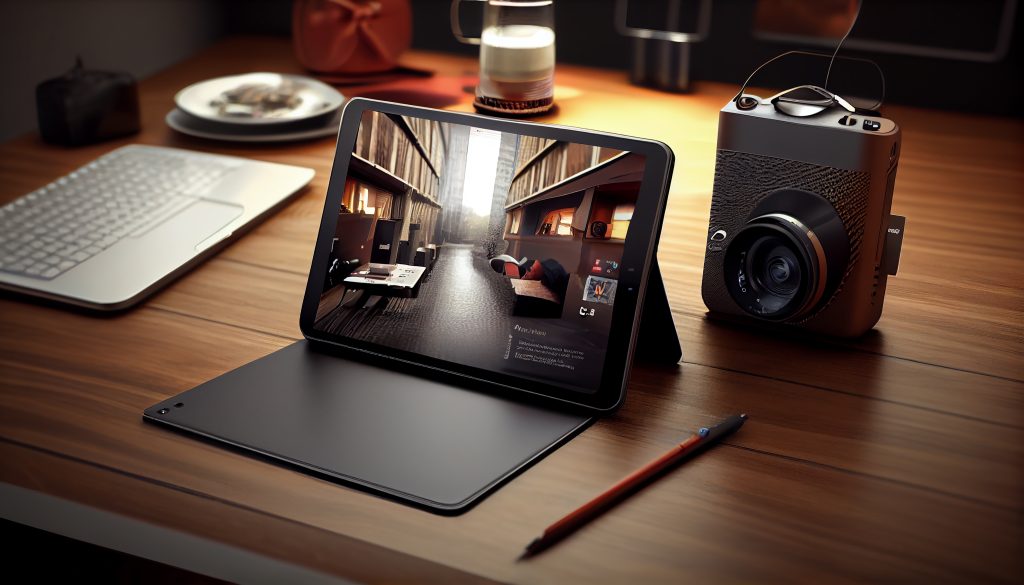
AI image editing tools are software applications powered by artificial intelligence that can automatically analyze, modify, and generate images.
Unlike traditional editing software, AI tools do not rely only on manual input. Instead, they use machine learning models trained on millions of images to understand patterns, objects, and visual structures.
These tools can perform complex tasks such as:
- Automatically enhancing image quality
- Removing or replacing backgrounds
- Detecting and removing objects
- Improving facial features
- Generating new images from text descriptions
- Applying artistic styles to photos
AI tools are widely used across industries, including marketing, photography, entertainment, education, and e-commerce.
How AI Image Editing Tools Work
AI image editing systems use advanced technologies to process and generate visuals.
Machine Learning
Machine learning allows AI systems to learn from large datasets and improve accuracy over time.
Deep Learning
Deep learning uses neural networks that mimic the human brain to understand complex image structures.
Computer Vision
Computer vision enables AI to identify objects, faces, and backgrounds within images.
GANs (Generative Adversarial Networks)
GANs use two competing AI models to create highly realistic images.
Diffusion Models
Diffusion models generate images by gradually refining noise into detailed visuals.
Key Features of AI Image Editing Tools
Modern AI tools come with powerful features:
Background Removal
AI can instantly remove or replace image backgrounds with precision.
Object Removal
Unwanted objects can be erased without damaging image quality.
Image Upscaling
Low-resolution images can be converted into HD or 4K quality.
Face Enhancement
AI improves skin texture, lighting, and facial details.
Text-to-Image Generation
Users can create images simply by describing them in text.
Style Transfer
Images can be transformed into artistic styles such as painting or digital art.
Benefits of AI Image Editing Tools
AI image editing tools offer several advantages:
1. Time Efficiency
Editing tasks that once took hours can now be completed in seconds.
2. Easy Accessibility
No advanced technical skills are required.
3. Cost Reduction
Businesses save money by reducing the need for professional designers.
4. Creative Freedom
5. Business Growth
High-quality visuals improve marketing performance and engagement.
6. Automation
Repetitive editing tasks are handled automatically.
7. Scalability
Large volumes of visual content can be produced quickly.
Real-World Applications
AI image tools are used in many industries:
Social Media
Creators use AI for posts, thumbnails, and content visuals.
E-Commerce
Product images are enhanced to increase sales.
Marketing
Businesses create advertisements using AI-generated visuals.
Photography
Old or damaged photos are restored.
Entertainment
AI is used in movies, animation, and gaming.
Education
Teachers create visual learning content using AI tools.
Risks and Challenges of AI Image Tools
Despite benefits, AI also presents risks:
Privacy Concerns
Uploaded images may be stored or misused.
Deepfake Technology
AI can create fake but realistic images.
Misinformation
Edited visuals can spread false information online.
Ethical Misuse
AI can be used to create misleading content.
Job Displacement
Automation may reduce demand for traditional designers.
Copyright Issues
Ownership of AI-generated content is often unclear.
Deepfake Technology Explained
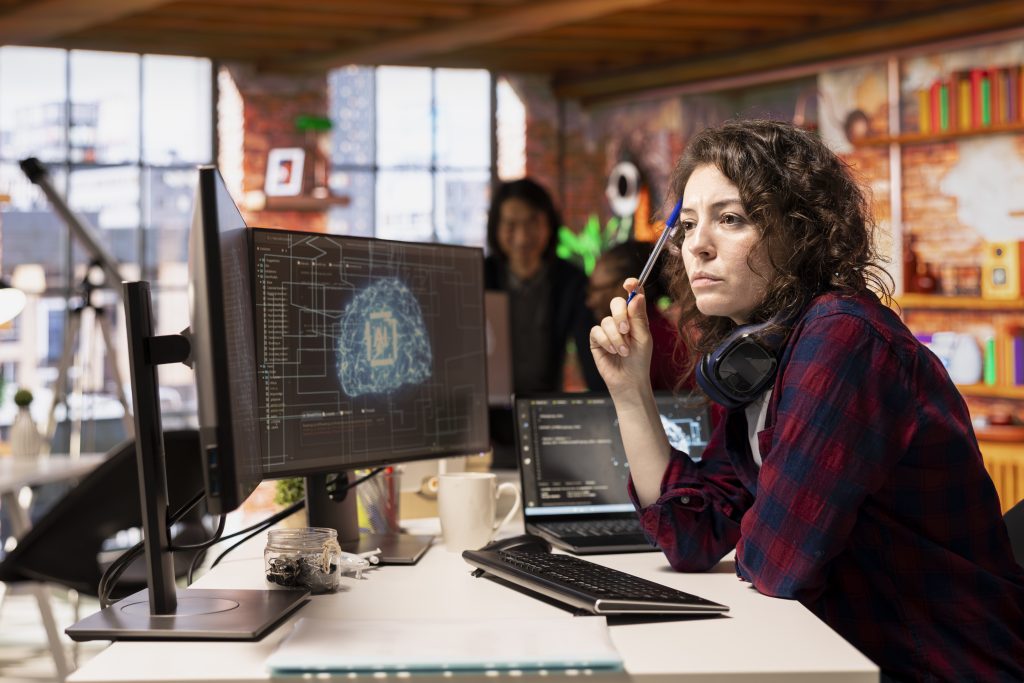
Deepfakes are AI-generated images or videos that look real but are completely synthetic.
Positive Uses
- Film production
- Entertainment
- Voice restoration
Negative Uses
- Fake news
- Identity theft
- Online scams
- Political manipulation
Deepfake technology is one of the most controversial AI developments today.
AI Terms Glossary (Software Development Basics)
Microservice meaning:
A small, independent service that works as part of a larger system.
Framework meaning:
A ready-made structure that helps developers build applications faster.
Library meaning:
A collection of reusable code that developers can use in their projects.
Codebase meaning:
The complete set of source code for a software project.
Debugging meaning:
The process of finding and fixing errors in code.
Version control meaning:
A system for tracking changes made to code over time.
Git meaning:
A popular version control system used for managing and tracking code changes.
Repository meaning:
A storage place where a project’s code and files are saved.
Commit meaning:
Saving changes made to code in version control systems like Git.
Branch meaning:
A separate version line of code is used to develop features independently.
Ethical Use of AI Image Tools
Ethical guidelines are essential for responsible AI use:
- Always get consent before using images
- Clearly label AI-generated content
- Avoid creating misleading visuals
- Respect privacy and personal data
- Use AI for creativity, not deception
Legal Aspects of AI Image Technology
Governments are developing regulations for AI use:
- Data protection laws
- Copyright ownership rules
- Deepfake restrictions
- Cybercrime prevention laws
These regulations aim to ensure safe and responsible use of AI.
Future of AI Image Editing Tools
AI is expected to become even more powerful:
Real-Time Editing
Instant image editing during capture.
Hyper-Realistic Images
AI visuals will become indistinguishable from real photos.
Full Automation
Entire design workflows will be AI-driven.
AR/VR Integration
AI will be used in virtual and augmented reality environments.
Personalized AI Systems
AI will adapt to user preferences automatically.
Best Practices for Safe AI Use
- Use trusted AI platforms
- Avoid sensitive image uploads
- Read privacy policies carefully
- Verify AI-generated content
- Stay updated with AI laws
H2: Conclusion
AI image editing tools have completely transformed digital creativity. They offer speed, efficiency, and accessibility that were never possible before. From individuals to large businesses, everyone benefits from AI-powered visual tools.
However, this technology must be used responsibly. Privacy risks, deepfakes, and ethical concerns cannot be ignored. The future of AI is powerful, but it requires careful control and responsible usage.
If used correctly, AI image editing tools can become one of the most important creative technologies of the modern world.
FAQs
Q1: What are AI image editing tools, and how do they work?
AI image editing tools are advanced software systems that use artificial intelligence to automatically analyze, edit, and generate images without requiring manual editing skills. These tools work by using machine learning and deep learning models trained on millions of images. They learn patterns such as colors, shapes, lighting, and textures, which allows them to make intelligent decisions while editing images.
For example, when you upload a photo, AI can automatically detect the background, remove unwanted objects, enhance facial details, or even generate an entirely new image based on a text description. This makes the editing process faster, more accurate, and accessible for beginners as well as professionals.
Q2: Are AI image editing tools free or paid?
AI image editing tools come in both free and paid versions. Free tools usually offer basic features such as background removal, simple enhancements, or limited image generation. However, they often include watermarks, usage limits, or lower-quality outputs.
Paid tools provide more advanced features such as high-resolution image generation, commercial usage rights, faster processing, and professional editing capabilities. Many businesses prefer paid versions because they offer better accuracy, more customization, and higher-quality results suitable for marketing or branding.
Q3: What is deepfake technology in AI image editing?
Deepfake technology is an AI-based system that can create highly realistic but completely fake images, videos, or audio. It works by analyzing real human faces and expressions, then reconstructing them digitally using machine learning models.
While deepfakes can be used for entertainment, filmmaking, and creative projects, they also raise serious concerns. They can be misused to create fake news, impersonate individuals, or spread misinformation. Because of this, many countries are developing strict regulations to control deepfake technology and prevent misuse.
Q4: Can AI image editing tools replace professional designers?
No, AI image editing tools cannot fully replace professional designers. While AI can automate many repetitive and technical tasks such as background removal, color correction, and image enhancement, it still lacks human creativity, emotional understanding, and storytelling ability.
Professional designers bring originality, brand identity, and creative thinking that AI cannot replicate completely. However, AI acts as a powerful assistant that helps designers work faster and more efficiently by handling basic tasks.
Q5: Are AI-generated images legal to use?
Yes, AI-generated images are generally legal to use, but their legality depends on how they are created and used. In many countries, laws regarding AI-generated content are still evolving.
If AI images are created using licensed tools and do not violate copyright rules or personal rights, they are usually safe for commercial and personal use. However, using AI to generate misleading content, impersonate individuals, or violate privacy can lead to legal issues.
It is always recommended to check the terms of service of the AI platform and follow local copyright laws before using AI-generated content commercially.
Q6: What are the main risks of using AI image editing tools?
AI image editing tools come with several risks that users should understand. One major risk is privacy, as uploaded images may be stored or processed on external servers. Another risk is misinformation, where edited or AI-generated images can be used to spread false information online.
There is also the issue of deepfakes, which can create realistic but fake visuals that may harm individuals or organizations. Additionally, copyright uncertainty remains a concern because it is not always clear who owns AI-generated content—the user, the developer, or the AI system itself.
Q7: How can users safely use AI image editing tools?
To use AI image editing tools safely, users should always choose trusted and well-known platforms that have strong privacy policies. It is important to avoid uploading sensitive or personal images unless necessary.
Users should also review the terms of service carefully to understand how their data is being used. Another important practice is to verify AI-generated content before publishing it, especially in professional or public contexts. Responsible usage ensures both safety and ethical compliance.
Q8: Which industries benefit most from AI image editing tools?
AI image editing tools are widely used across multiple industries. In marketing, they help create advertisements and social media content quickly. In e-commerce, they improve product images to attract more customers.
The photography industry uses AI to restore old or damaged photos. The entertainment industry uses AI for movie production, animation, and visual effects. Education also benefits from AI-generated visuals that make learning more interactive and engaging.
Because of their flexibility, AI tools are becoming essential in almost every digital industry.
Q9: What is the future of AI image editing technology?
The future of AI image editing is extremely advanced and fast-moving. In the coming years, AI will enable real-time editing where images can be modified instantly while being captured.
We will also see hyper-realistic AI-generated visuals that are almost impossible to distinguish from real photographs. Entire design workflows will become fully automated, allowing users to create complete projects with minimal effort.
Additionally, AI will integrate with augmented reality (AR) and virtual reality (VR), creating immersive digital environments. Personalized AI systems will also become common, adapting to individual user styles and preferences.
Q10: Why is AI image editing important in the modern digital world?
AI image editing is important because it significantly improves speed, efficiency, and creativity in digital content creation. It allows individuals and businesses to produce high-quality visuals without needing advanced technical skills.
In today’s competitive online world, visual content plays a major role in attracting attention and engaging audiences. AI tools help brands create professional-level content quickly, which improves marketing performance and digital presence.
At the same time, AI democratizes creativity by allowing anyone to produce professional visuals, making digital design more accessible than ever before.
